
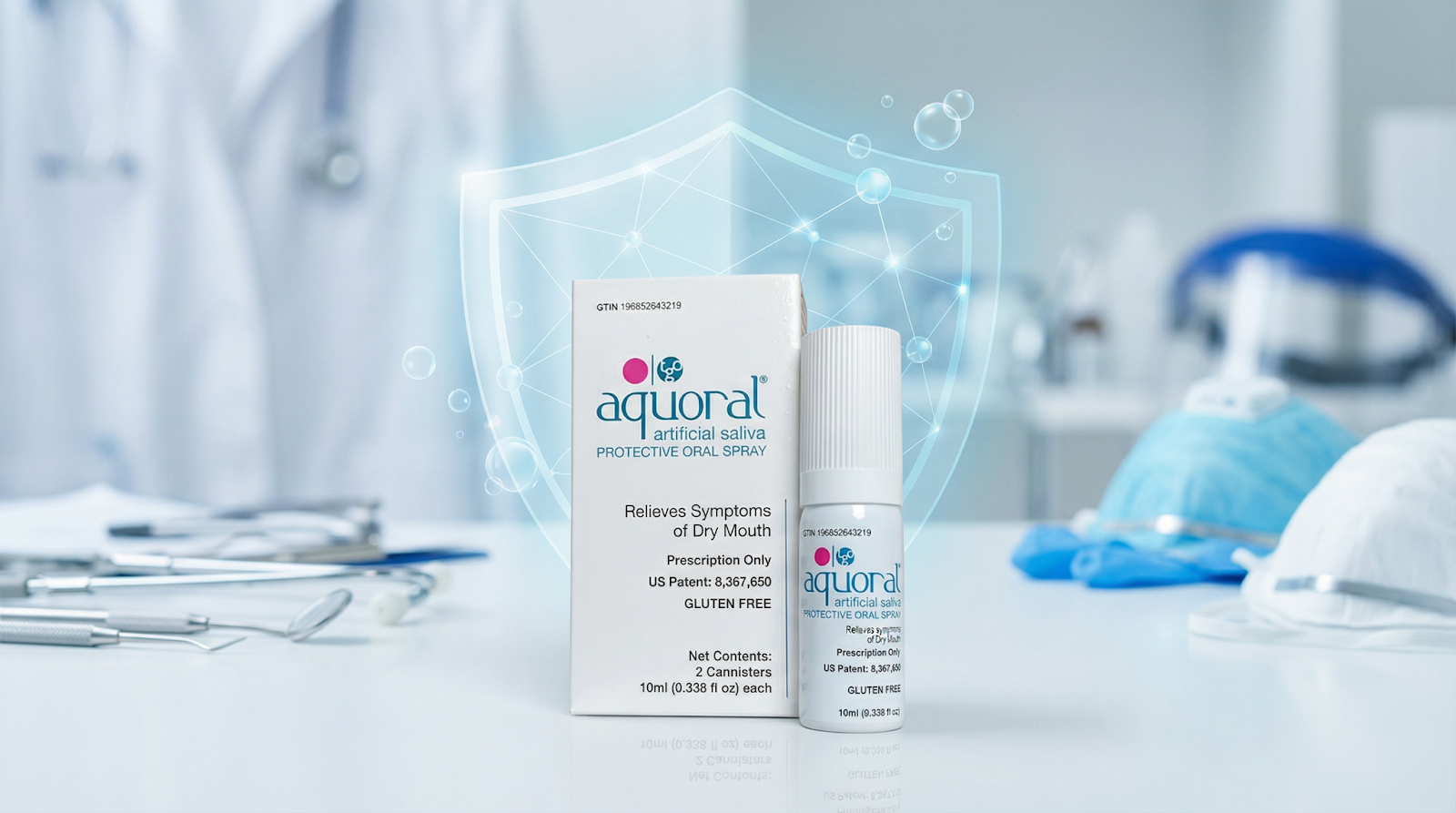
Xerostomia (dry mouth) negatively affects oral health and overall well-being. It happens when the salivary glands don’t produce enough saliva, causing oral discomfort and other complications. This guide explains the causes and clinical effects of xerostomia, describes the benefits and ingredients of Aquoral Spray, and provides recommended ways to use it for relief. Understanding these points helps people with dry mouth choose the best ways to manage their condition and improve their quality of life.
Even though xerostomia is common, finding consistently effective treatments remains a challenge in clinical research.
Systematic Review of Xerostomia Treatment Strategies
Therapeutic strategies for xerostomia, regardless of cause, have not produced definitive or consistently effective results so far. Objective: to systematically review the available scientific evidence about treatments for dry mouth from various causes.
Treatment of xerostomia and hyposalivation in the elderly: A systematic review, FJ Silvestre, 2016
What Is Xerostomia and How Does It Affect Oral Health?
Xerostomia is a constant feeling of dry mouth caused by reduced saliva production. Saliva helps with digestion, protects tooth enamel, and lubricates the mouth. When saliva flow decreases, it can make swallowing, speaking, and tasting difficult and increase the risk of cavities and gum disease.
What Are the Common Causes and Symptoms of Dry Mouth?
Several factors can lead to xerostomia, including:
- Medications: Many prescription and over-the-counter medications, like antihistamines and antidepressants, can cause dry mouth as a side effect.
- Chronic Conditions: Diseases such as diabetes, Sjögren’s, and Parkinson’s can affect salivary gland function.
- Lifestyle Factors: Habits like smoking or drinking too much alcohol can also reduce saliva production.
Identifying these causes is important to guide proper management and treatment of xerostomia.
How Does Xerostomia Impact Saliva Production and Oral Mucosa?
Lower saliva output reduces the mouth’s ability to neutralize acid, which raises the risk of tooth decay. Lack of lubrication causes dry, irritated mouth tissues that are more prone to infection and sores. These effects highlight the need for targeted treatments to relieve dry mouth.
What Are the Key Benefits and Composition of Aquoral Spray?
Aquoral Spray is designed to provide relief for people with xerostomia; its ingredients offer benefits that help manage oral dryness.
- Long-lasting Hydration: Aquoral Spray delivers immediate moisture to the mouth, easing discomfort from dry mouth.
- Convenience of Use: The spray form makes it easy to apply throughout the day.
- Composition: Aquoral Spray contains a mix of active ingredients that work together to hydrate the mouth effectively.
Which Active Ingredients in Aquoral Provide Effective Oral Hydration?
The effectiveness of Aquoral Spray comes from its key active ingredient,
- At the core of Aquoral® is Oxidized Glycerol Triester (OGT) — a proprietary, lipid-based technology designed to do more than temporarily moisten the mouth.
- Unlike traditional water-based saliva substitutes that evaporate quickly, OGT works by binding directly to dry oral tissues. Upon application, it immediately helps hydrate and soothe irritated surfaces. But its true differentiation lies in what happens next: OGT forms a protective, hydrophobic barrier over the tissues. This layer helps lock in moisture, reducing ongoing water loss and creating an environment that allows the oral tissues to recover and maintain hydration longer.
- A helpful analogy is applying lip balm to chapped lips or lotion to dry hands. The initial application provides relief, but with consistent use, the protective barrier supports ongoing repair and resilience. Over time, many patients experience longer intervals between symptoms as the tissues remain better conditioned.
- By combining immediate comfort with sustained protection, OGT represents a fundamentally different approach to managing dry mouth—one designed not just to relieve symptoms, but to support the health of the tissues themselves.
Radiotherapy-induced xerostomia (RIX) is a common side effect of radiotherapy (RT) in head and neck cancer patients and significantly affects survivors’ quality of life. The main goal was to assess how much patients’ dry mouth symptoms improved after using a sodium-hyaluronate mouthwash compared to a placebo.
Sodium-hyaluronate mouthwash on radiotherapy-induced xerostomia: a randomised clinical trial, R Patini, 2023
Together, these ingredients help relieve the symptoms of xerostomia.
How Does Aquoral Spray Compare to Other Dry Mouth Relief Products?
Compared to water-based sprays, Aquoral’s lipid-based formula provides longer-lasting hydration and comfort. The spray allows targeted application to the mouth’s lining, offering focused relief.
How Should Patients Use Aquoral Spray for Optimal Dry Mouth Relief?
Following the recommended instructions ensures the best relief. Proper use helps spread the spray evenly across the mouth lining for maximum effect.
What Are the Step-by-Step Instructions for Proper Aquoral Spray Application?
- Preparation: Shake the bottle gently before use to mix the ingredients well.
- Application: Hold the spray nozzle close to your mouth and spray directly onto the mouth lining or on the tongue. Purposeful attention need be given to then moving it around your mouth.
- Post-application Care: Avoid eating or drinking for at least 10 minutes after using the spray to let the ingredients work.
Following these steps helps you get the most benefit from Aquoral Spray.
What Are the Recommended Dosage and Safety Precautions?
For symptom control, Aquoral Spray can be used as needed throughout the day. Keep these safety tips in mind:
- Dosage: Standard dosing, per the instructions, is 2 sprays that provide effective relief.
- Safety: If you are allergic to any ingredients, talk to a healthcare professional before using.
Following these dosage and safety guidelines helps you use Aquoral Spray safely as part of your dry mouth care.
How Can Aquoral Spray Manage Dry Mouth from Specific Medical Conditions?
Aquoral Spray is suitable for people with xerostomia caused by certain medical conditions. Knowing how it helps in these cases supports proper clinical care.
How Does Aquoral Help Patients Using CPAP or Undergoing Cancer Treatment?
CPAP therapy can cause dry mouth due to airflow during sleep; Aquoral Spray quickly lubricates the mouth to improve comfort at night. Similarly, patients receiving cancer treatment often have dry mouth from radiotherapy or chemotherapy; Aquoral Spray can reduce symptoms and support oral health during treatment.
What Are the Usage Guidelines for Sjögren’s and Medication-Induced Xerostomia?
For patients with Sjögren’s or dry mouth caused by medications, Aquoral Spray can be used as an additional treatment. Regular use throughout the day—especially before meals or during times of increased dryness—is recommended. It’s best to consult a healthcare provider to tailor the frequency and ensure safety.
Some patients consider marijuana as an alternative treatment option; however, consulting a healthcare professional is important to evaluate suitability and possible interactions.
Xerostomia can also be linked to underlying neurological diseases, so accurate diagnosis and condition-specific care are essential.

